About
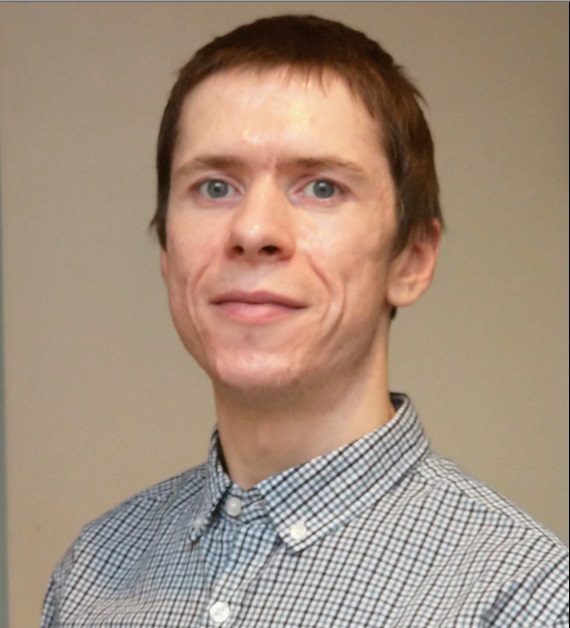
I'm a computational researcher and neurologist at Imperial College London.
My work aims to help facilitate safe deployment of AI in healthcare through rigorous evaluation. It sits at the interface of active clinical practice, AI safety/evaluation, and cognitive neuroscience.
My research addresses an important bottleneck in medical AI, namely how to rigorously stress-test and evaluate clinical models before they reach real patients. To solve this, I build logic-grounded doctor–patient interaction simulations and detailed synthetic data pipelines. These environments allow us to test AI and decision systems against thousands of rare counterfactual scenarios and clinical 'edge cases' that rarely appear in standard benchmark datasets.
Current Work & Interests
- Simulation-Based Evaluation of Clinical AI: Standard benchmark datasets (e.g. retrospective EHR cohorts, case reports or board-exam Q&As) fail to capture the conversational ambiguity, diagnostic drift, and high-stakes edge cases of real clinical practice. I'm developing a novel methods for generating large volumes of realistic synthetic patient data to strategically probe for failures in the atypical 'edge cases' where algorithms are most likely to break, all without requiring access to real patient data. [Paper in the context of Headache] [Paper in the context of Multiple Sclerosis]
- Assessing the Boundaries of Local Medical AI: Related to above, I'm exploring practical use of small, locally deployable AI models in healthcare. My focus is on finding the smallest possible models that can still handle certain medical tasks reliably without needing to send data to the cloud or expensive large systems. Testing how these models 'understand' medical concepts, helps clarify what compact AI might realistically achieve and where it falls short. [Paper]
- Quantifying Individual Treatment Effects: This work focuses on creating a framework to help clinicians move from intuitive guesswork to data-driven clinical decisions. [effectsize.app] | [Paper] | [Code]
- Machine Learning to Uncover Hidden Treatment Responses: This research demonstrates how machine learning can detect complex patterns in clinical trial data that traditional analyses might miss. A key focus is understanding the data requirements and collection practices necessary to make this possible. [Paper] | [Code]
Applied Clinical Systems & Open-Source Tools/Work
-
Automated NHS Clinical On-Call Rota Engine
Departmental on-call scheduling in acute hospital settings is a high-dimensional constraint optimisation problem (balancing job plans, leave, multi-site specialty coverage). It historically consumed days of senior clinician time each rota cycle. I developed a dedicated constraint-solving application built in Python/Streamlit that automates conflict-free rota generation, which is now used across multiple Hospitals, compressing scheduling work from days to minutes while enforcing a fair rota. -
Individual Treatment Effect Quantifier (`effectsize.app`)
Moving clinical data interpretation beyond guesswork towads a more rigorous statistical/quantitative exercise. I developed an interactive tool illustrating potential benefits of actively engaging with statistical assessment of whether treatment response variation reflects true change or statistical noise. -
Epilepsy/Neurology Consultation Webtool
A tool I made to assist with documentation and information presentation in epilepsy and neurology consultations. -
Big data, machine learning and artificial intelligence: a neurologist’s guide
Practical Neurology, 2021. -
Clinical Data Plotter
A visualisation tool I made to easily see relationships between lab data, observations, and treatment timings.
Previous research
Post-doctoral
Risk prediction modelling in Parkinson's disease. Here I learned the requirements for making useful inference from clinical data. Supervised by Prof Alastair Noyce (Prentive Neurology Unit, Queen Mary University London), during my clinical foundation and core medical training.
- Improving estimation of Parkinson’s disease risk—the enhanced PREDICT-PD algorithm. npj Parkinson's Disease. 2021. (*equal contribution). [Link]
- Optimising classification of Parkinson’s disease based on motor, olfactory, neuropsychiatric and sleep features. npj Parkinson's Disease. 2021. [Link]
- Testing shortened versions of smell tests to screen for hyposmia in Parkinson’s disease. Movement Disorders Clinical Practice, 2020. [Link]
- Screening performance of abbreviated versions of the UPSIT smell test. Journal of Neurology, 2019. (*equal contribution). [Link]
PhD research
Using virtual simulation, fMRI and machine learning to investigatie the retrosplenial cortex's role in human memory and navigation. Here I learned how to make reliable inference from 'messy' human behavioural data; and the power of pairing different forms of simulation with machine learning and other analytical methods. Supervised by Prof Eleanor Maguire during medical school (UCL, MBPhD).
- Retrosplenial cortex indexes stability beyond the spatial domain. Journal of Neuroscience, 2018. [Link]
- Dissociating Landmark Stability from Orienting Value Using Functional Magnetic Resonance Imaging. Journal of Cognitive Neuroscience, 2018. [Link]
- Efficacy of navigation may be influenced by retrosplenial cortex-mediated learning of landmark stability. Neuropsychologia, 2017. [Link]
- A central role for the retrosplenial cortex in de novo environmental learning. eLife, 2015. [Link]
- Functional magnetic resonance imaging. British Journal of Hospital Medicine, 2015. [Link]
- Assessing the mechanism of response in the retrosplenial cortex of good and poor navigators. Cortex, 2013. [Link]
- Retrosplenial cortex codes for permanent landmarks. PLoS One, 2012. [Link]
- What is the function of the human retrosplenial cortex? PhD Thesis, University College London, 2015. [Link]
Collaboration
I regularly collaborate with clinical departments, academic labs, and AI research teams working on high-reliability clinical models, evaluation frameworks, and privacy-first healthcare deployment. Feel free to reach out via [first initial].[surname]21@imperial.ac.uk
Funding
I'm very grateful to those who have funded my research to date. Current: NIHR Acadmic Clinical Lectureship and NIHR Imperial Biomedical Research Centre (BRC). Previous: NIHR Academic Clinical Fellowship, NIHR Academic Foundation Programme, University College London Hospitals/University College London NIHR BRC funding scheme.